Design Guide ·
How to Choose the Right Wall Art
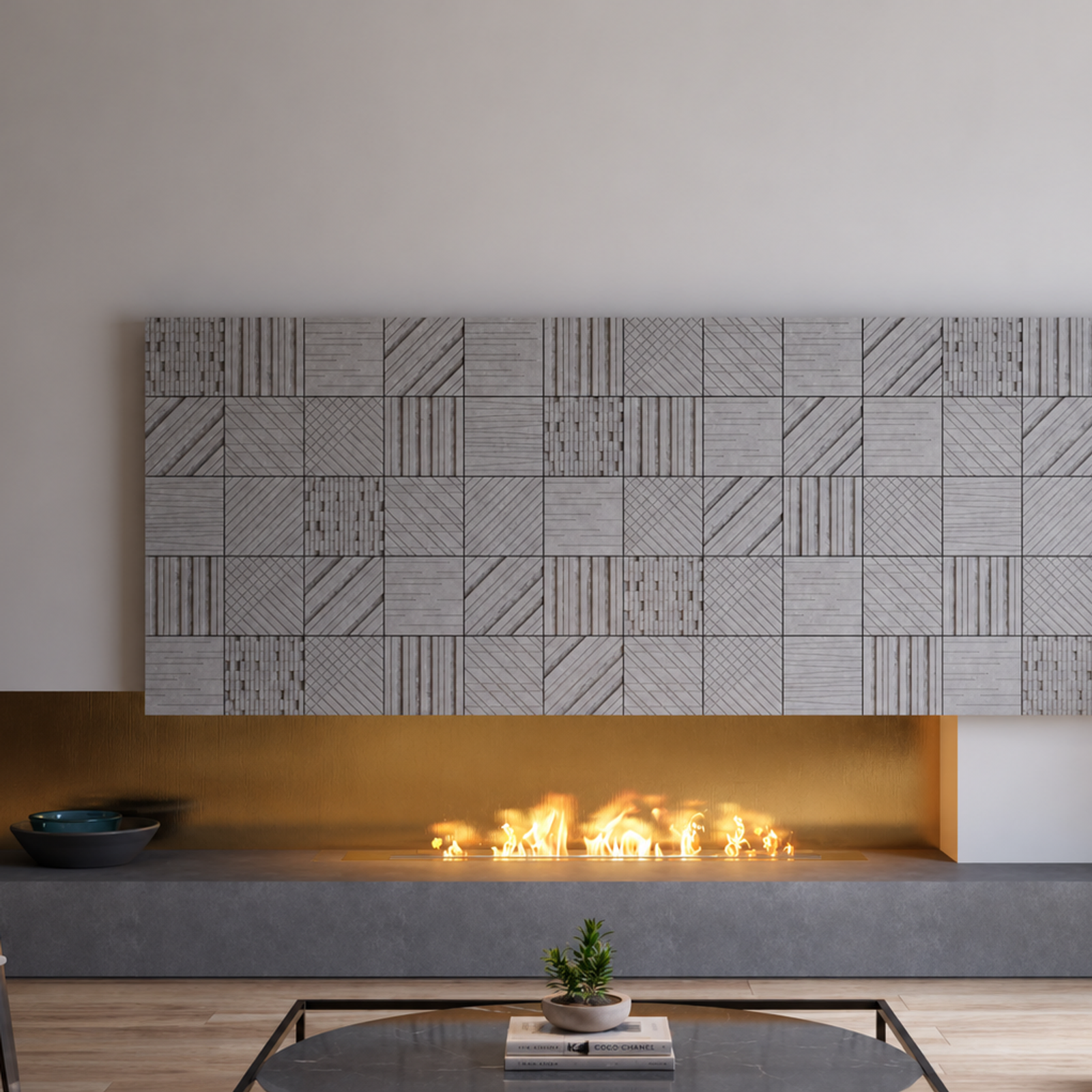
Choose an artwork not simply because it fits the wall, but because it belongs in the space.
Choosing the right wall artwork or panel does not begin and end with what you like or whether its dimensions fit a wall.
Art is part of a space’s composition and can play a central role in its character and presence. Choosing well means considering more than one aspect: scale and position, form and material, lighting, and ultimately the most important question: what does this work add to the space?
1. Begin with scale and proportion
First, consider the relationship between the size of the artwork, the wall and the space around it.
A small piece can lose its presence in a large room, while a large work may overwhelm a smaller setting. Consider ceiling height, nearby furniture and other elements, and the visual breathing room the work needs to feel balanced.
Size is not simply a measurement. It is part of the overall composition.
2. Choose a position that gives the work presence
Even an exceptional artwork can lose its impact in the wrong position.
Will it be the main focal point or part of a wider arrangement? Can it be seen clearly from the important viewpoints in the space? Is there enough room around it to give it presence?
Choose its position by considering its relationship with everything around it, not just the empty wall.
3. Choose a form that works with the design language
The shape, lines and details of a work should harmonise with the architecture and interior design.
A space may be built around strong geometry or softer, more flowing forms. In either case, the artwork should have a clear relationship with the space’s visual language.
A successful piece does not feel like something added later. It feels as though it belonged to the composition from the beginning.
4. Choose materials and colours carefully
Light stone or dark? Which type of stone? Does it sit comfortably with the floors, walls and furniture? Would the wall artwork benefit from brass, glass or another material?
Choosing material and colour should not be a decision separate from the space, but an extension of it.
With natural stone in particular, variations in veining, colour and formation give each piece a presence of its own. Selecting the stone itself becomes part of designing the work.
5. Consider the lighting
Lighting is not simply a way to see an artwork. It can transform its appearance.
The angle, intensity and distribution of light can reveal the depth of stone, uncover its details, emphasise particular elements or give the piece a quieter presence.
It is best to think of the artwork and its lighting as a single composition rather than two separate elements.
6. Ask about meaning, not only beauty
Here lies the difference between an artwork that occupies a space and one that adds value to it.
The purpose of wall art is not just to fill an empty wall. It is to bring meaning, add visual presence, strengthen a place’s identity and leave an impression on those who see it.
A piece might reflect an idea or a story, carry something of history and heritage, express the personality of the people who own the space or provide an inspiring element that helps create a balanced, comfortable atmosphere.
The real question becomes not:
Does this piece fit the wall?
But:
Does it belong in this place? And does it express something we want to remain present here?
Ultimately, art should leave an impression
A successful artwork is not necessarily the most complex or attention-grabbing. Its real value lies in its ability to become part of a place, work with its design and add meaning and presence that extend beyond the first glance.
At Stones Luxury®, we believe art does not exist to fill an empty space, but to give a place identity, meaning and a lasting presence.